On the morning of 16 September 2026, the veranda of Antharam Zilla Parishad High School turned into something between a classroom and a farm meeting. Organo Et School had arrived for a Drip Irrigation workshop, and 32 students from Grades 6 and 7 settled in, led by team member Kalyani S.
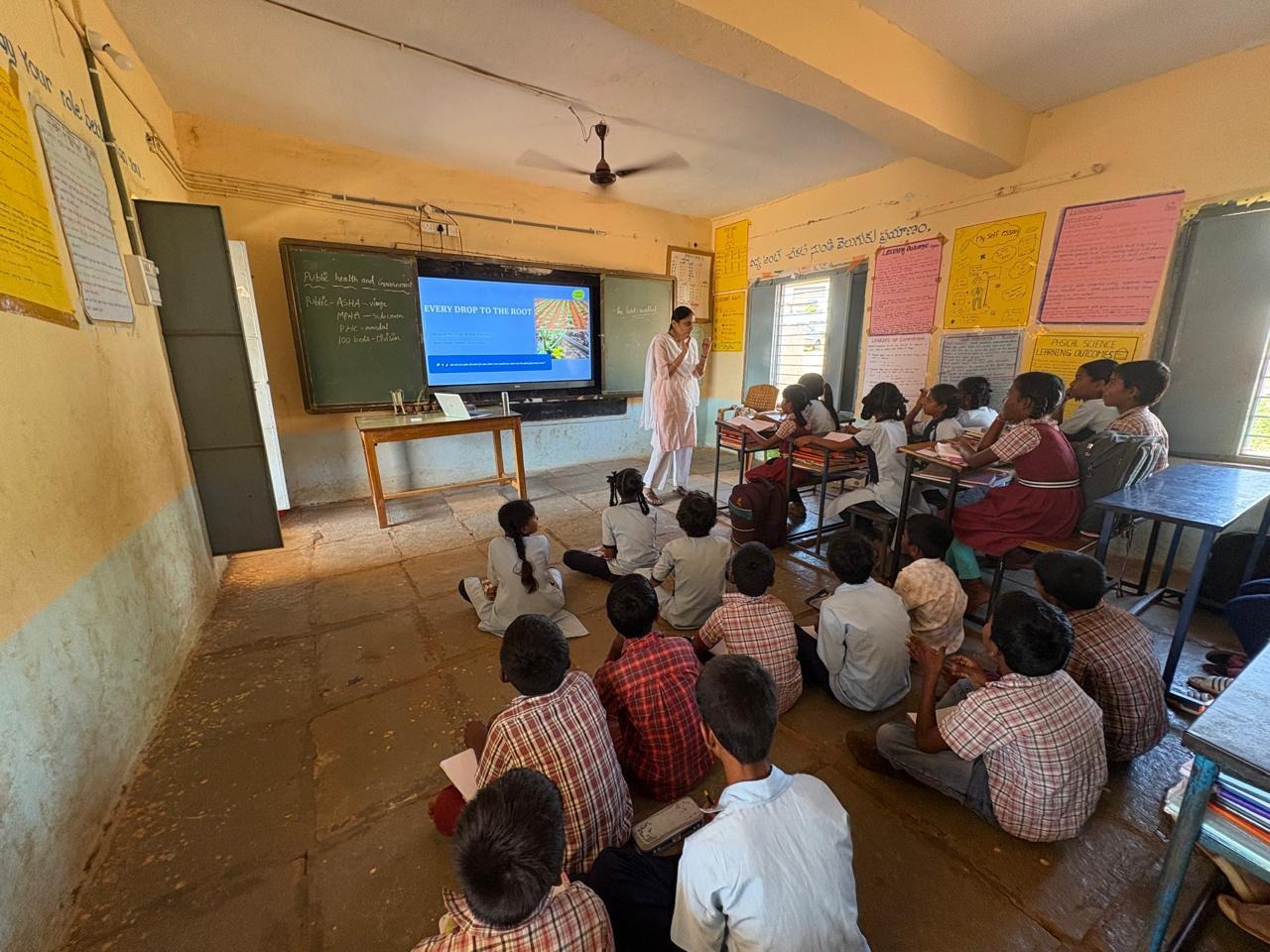
She opened with a question that made every hand rise at once: "How many of you have a farm field?" The room answered in a chorus of crops — tomato, cabbage, chilli, marigold and paddy. These weren't strangers to farming; many already had drip irrigation running in their own fields at home. So Kalyani leaned in with the real question of the day: "Do you know how it works, and why it matters?" That question became the thread that ran through everything that followed.
A Glass of Water, Not a Bucket
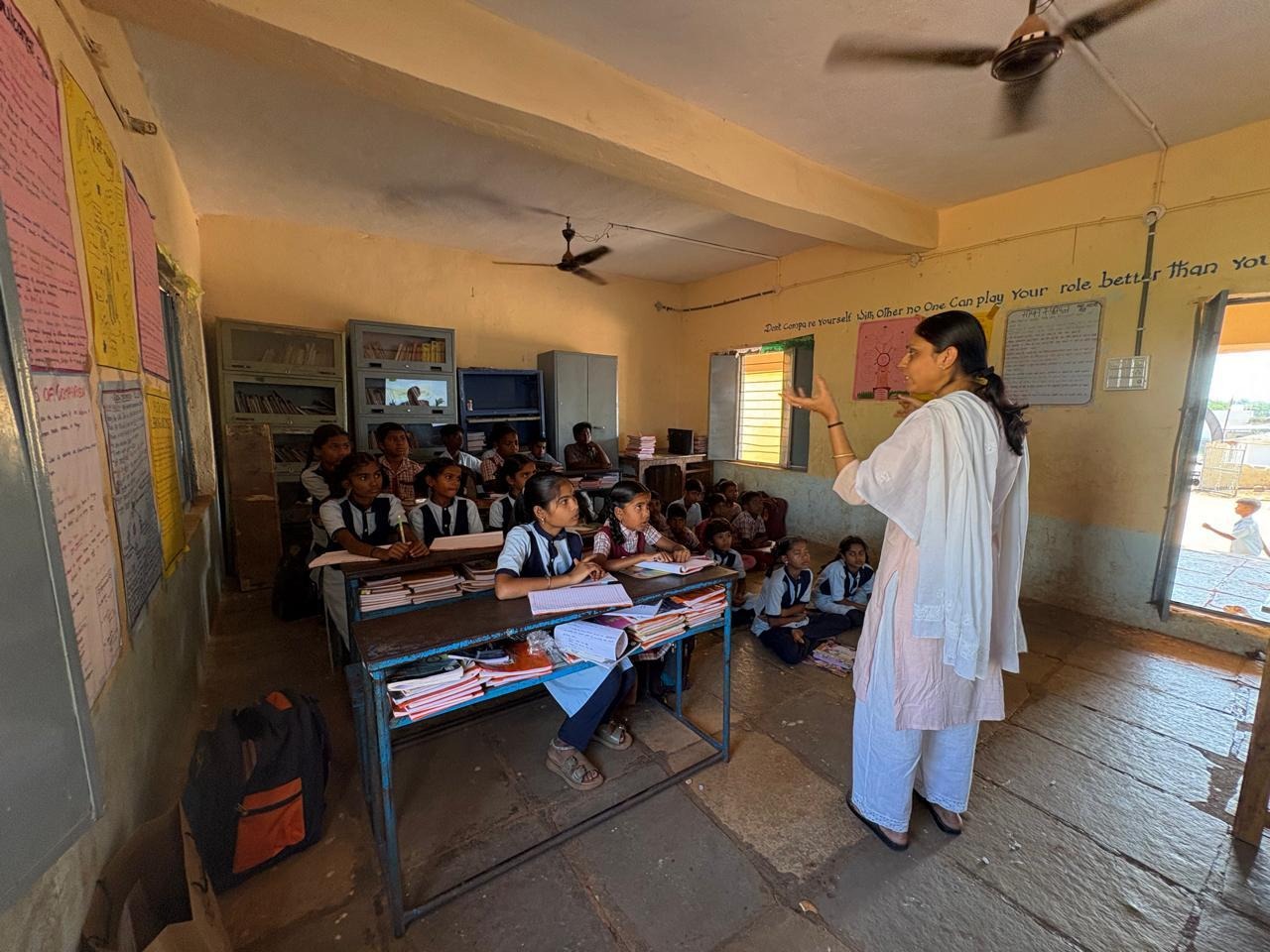
To answer it, Kalyani painted a picture: imagine you had just one glass of water for your plant — how would you make sure every single drop reached its roots, instead of spilling away uselessly onto the soil around it? The students paused to think, and slowly began following water on its much longer journey — from clouds gathering rain, to rivers and lakes carrying it forward, to groundwater holding it quietly beneath the earth, all the way to their own fields where it finally meets a thirsty plant. Step by step, they discovered that fresh water isn't something that simply appears whenever needed — it travels a long way to reach them, which makes it a treasure worth protecting rather than a resource to take for granted.Then came the moment that tied it all together: drip irrigation, Kalyani explained, is simply "giving your plant a glass of water instead of throwing a whole bucket at it."
How Every Drop Finds Its Way
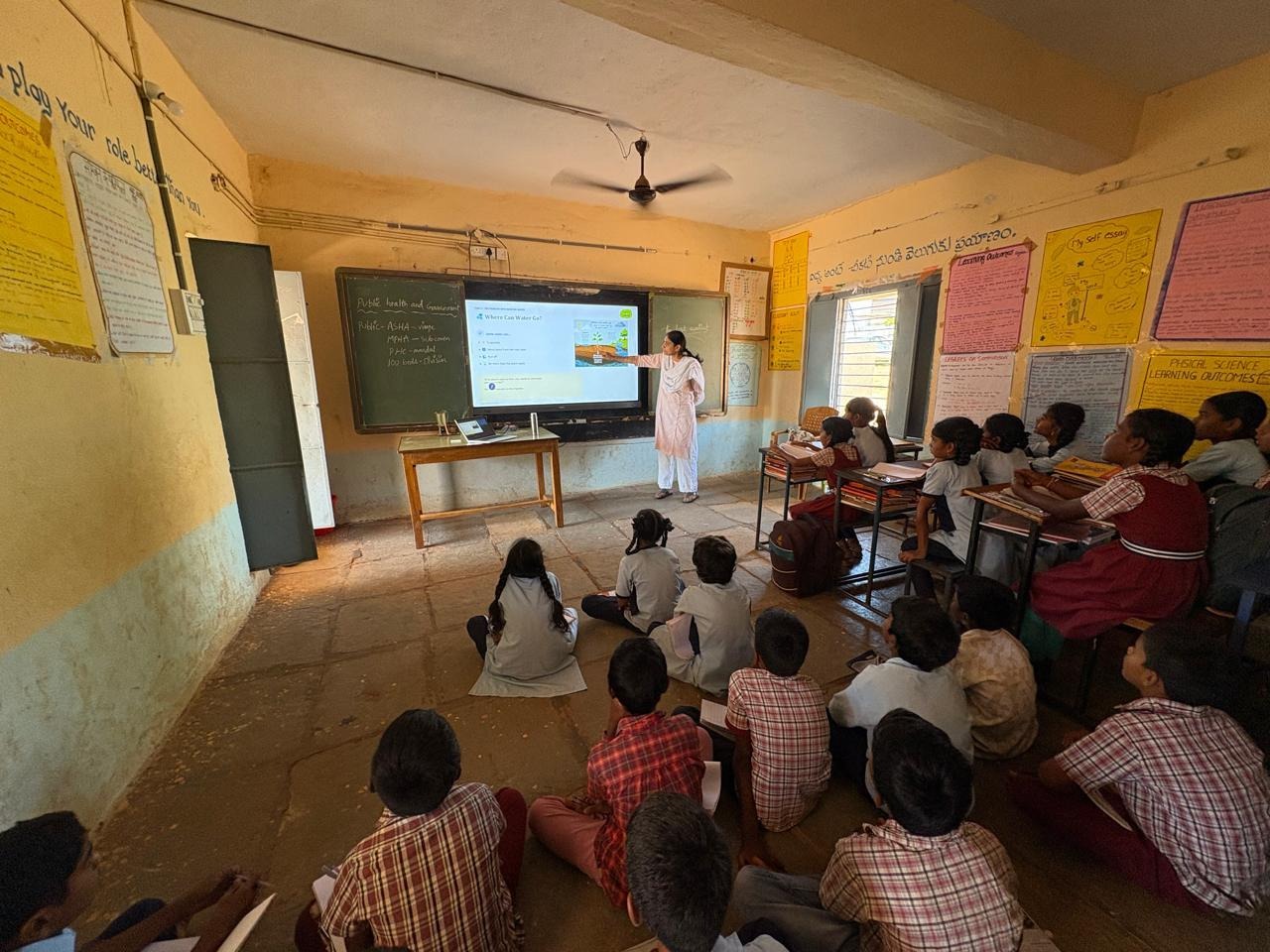
Kalyani walked the students through the different ways farmers give water to their crops — spreading it across a field, spraying it like rain, or sending it slowly, straight to the roots. Comparing the three side by side, the answer became obvious to everyone in the room: drip irrigation was the one that matched the glass-of-water idea perfectly. She then traced its simple journey, piece by piece — water begins in a tank, travels through a tube, and arrives as slow, controlled drops right beside each plant, reaching the root zone exactly where it's needed most. The big idea behind it all came together in four words: right water, right place, right time, less waste. For the students, this turned drip irrigation from a clever comparison into a system they could now picture clearly, one they understood from tank to root, drop by drop.
From Word Grid to Water Grid
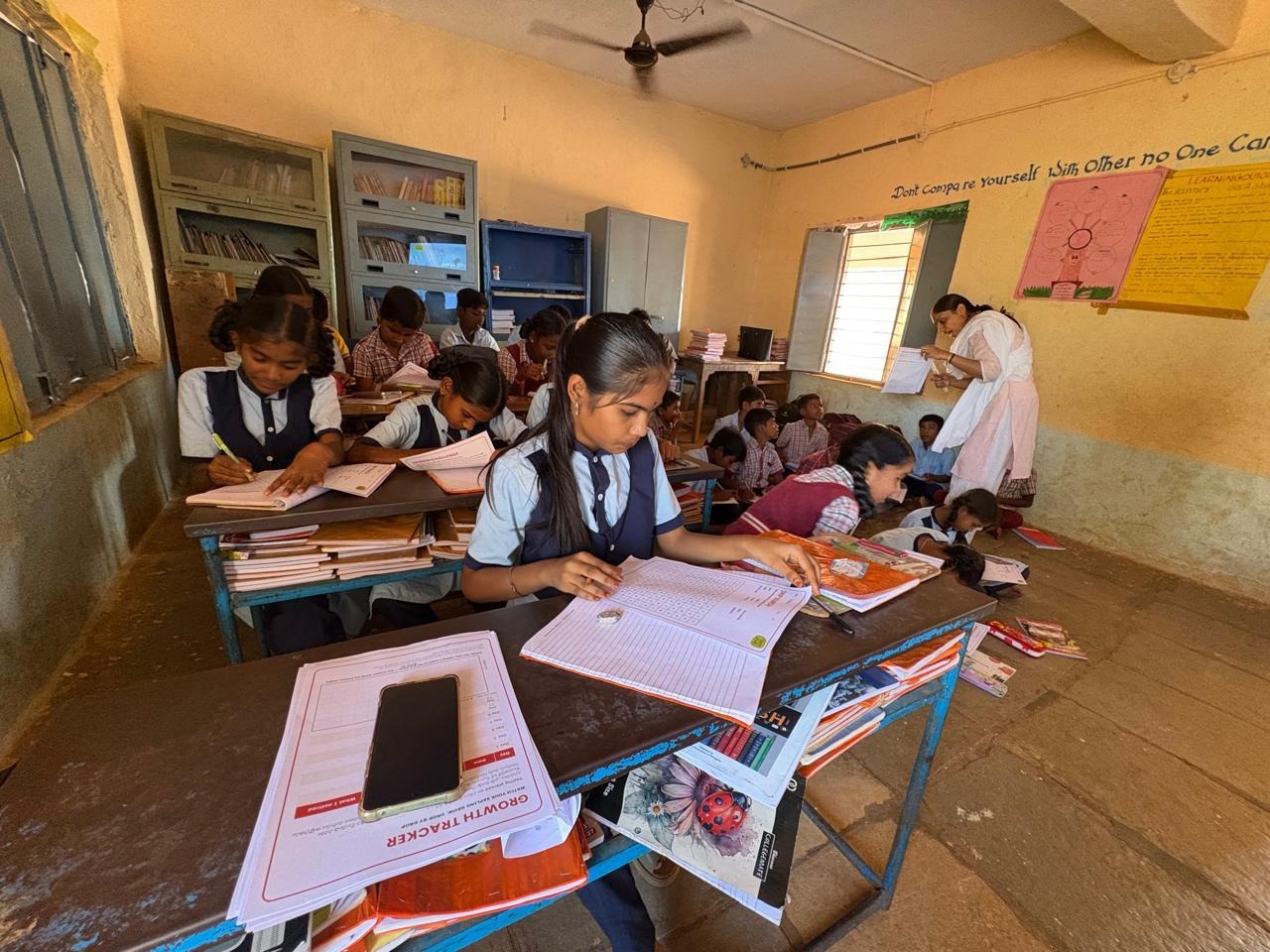
Before building anything, the students warmed up with a Drip Search word puzzle, hunting down words like ROOTS, GRAVITY, and SAVE WATER hidden inside a jumbled letter grid. It looked like a simple game, but each word they circled was quietly planting an idea in their minds
It was a playful bridge between listening and doing, easing the students from ideas on a screen toward the hands-on work waiting just ahead.
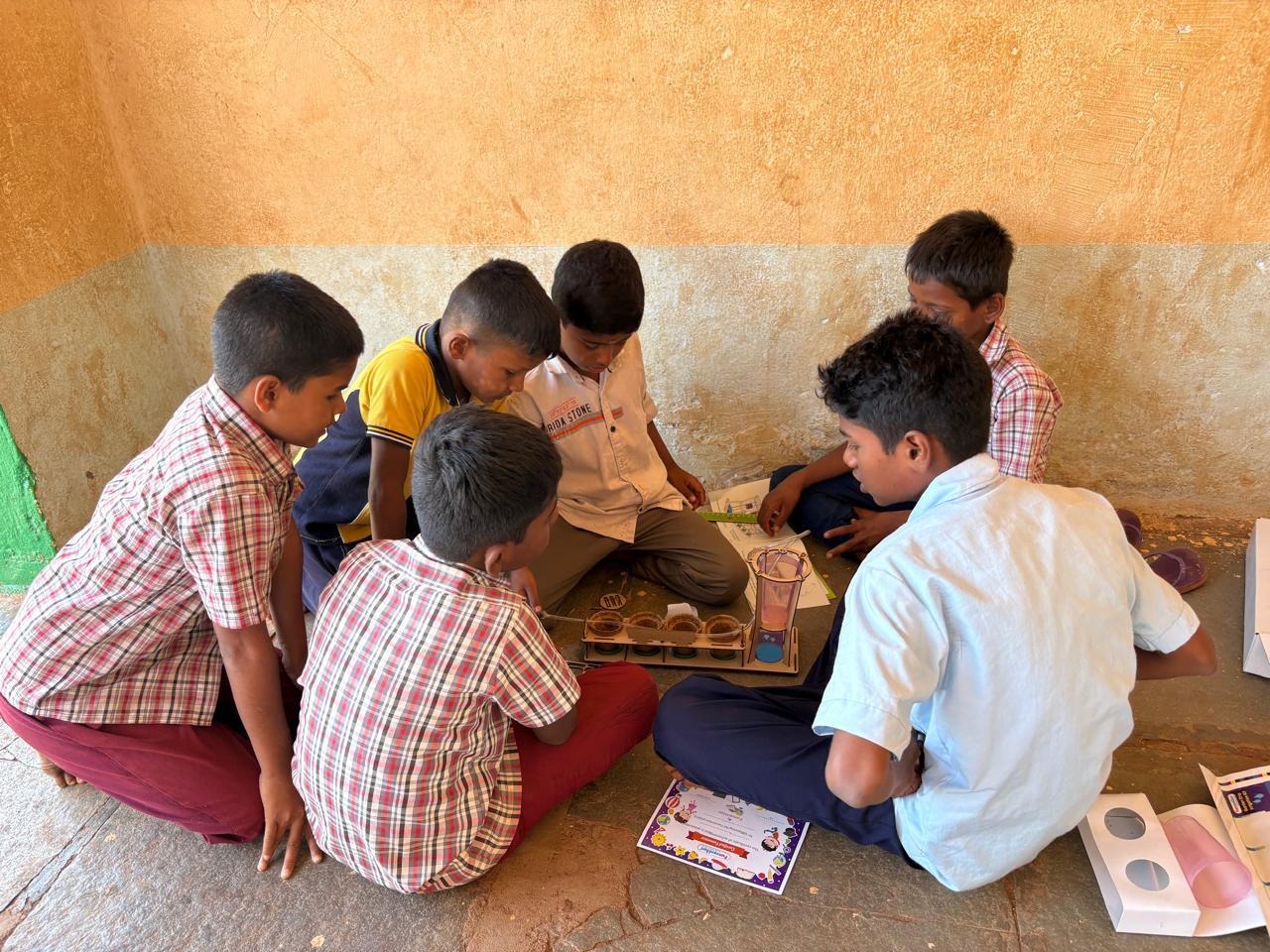
Then came the part everyone had been waiting for: hands-on kits. In small teams, students built their own miniature drip irrigation systems, piecing together tanks, tubes and root zones exactly as they'd seen in the diagrams — only this time, with their own hands. There were no pumps, no motors, no electricity involved; every drop moved simply because of gravity, the same quiet force that lets farmers water entire fields using nothing more than a raised tank and a well-placed tube.
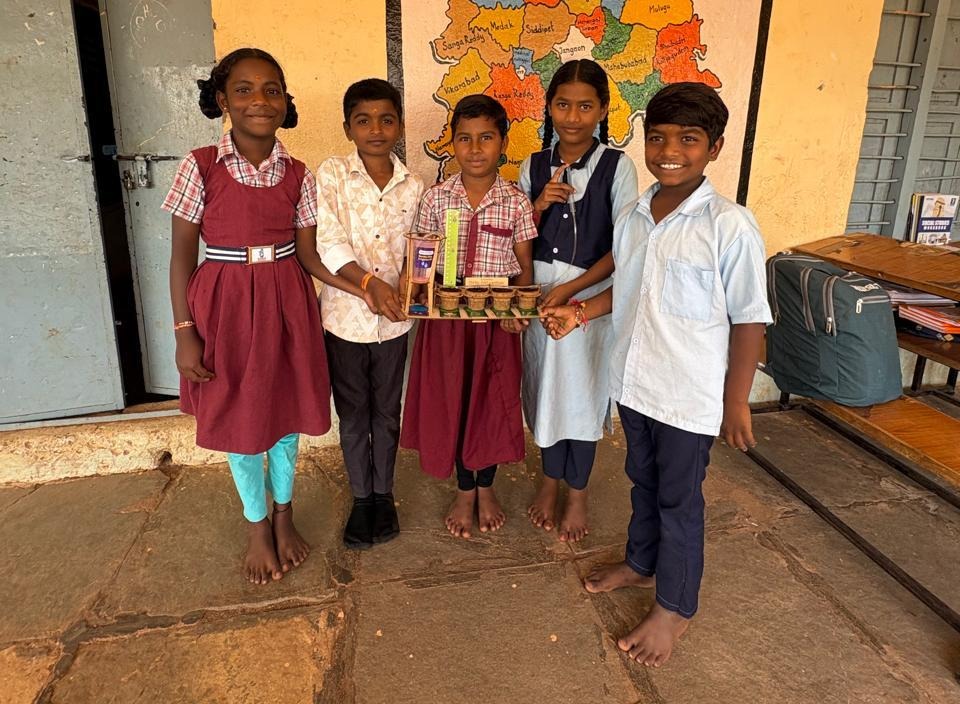
Watching water travel from tank to tube to root, drop by drop, turned what had been an idea into something the students could see, touch, and understand for themselves.
This Time, the Workshop Didn't End in Two Hours
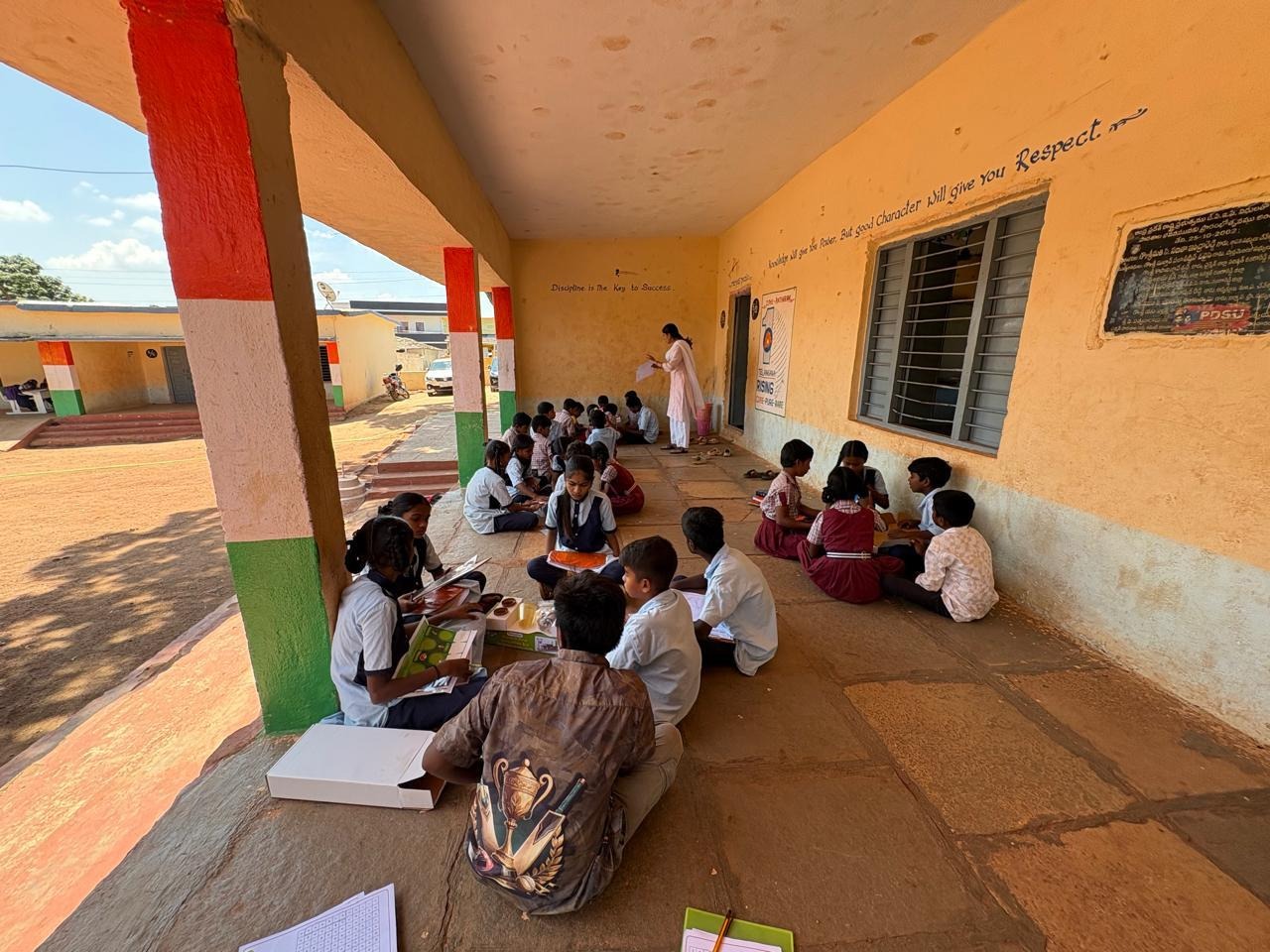
Each group walked away with a Growth Tracker and a small miniature drip irrigation kit, carrying the workshop with them long. Starting from the very day they planted their seed, they would return to it every two days, measuring its height from soil to tip, and noting the weather alongside it — sunny, cloudy, or rainy. Each entry ended with one simple line: what did I notice today? — turning something as ordinary as watering a plant into a quiet habit of paying attention. Slowly, over days and weeks, they would watch a flat line on their own grid begin to rise, proof in their own handwriting of what patient, mindful watering can do.
A workshop can teach an idea in two hours, but it takes a living plant, watched and cared for over time, to turn that idea into a habit. Every drop these students give from here on won't just be water — it will be a small, daily act of attention, carried forward from a single morning at Antharam ZPHS.
Get in Touch with Organo Et School
Every Drop Starts Somewhere — Let's Bring It to Your School Too
Organo Et School empowers people to embrace eco-living mindsets, behaviors, and habits. We recognize that for any positive impact to be sustainable, it must be long-term and inter-generational.
UNESCO recognized Organo Et School as a green citizen initiative and Uplink, the open innovation platform of the World Economic Forum (WEF) recognized OES as Global Innovative Solution.
Organo Et School is an experiential learning initiative set up by Organo in 2017 and has been facilitating field visits and workshops for Schools and Interest Groups. Organo Et School has impacted over 12,500+ students, 5000+ adults,1,600+ families, 40+ schools, 35+ communities, 10+ corporates over the past 8 years.
Join us on our journey toward sustainable living by subscribing to our channel and following us on Instagram for the latest updates.
Email us at oes@organo.co.in or call us at 91541 00775
Subscribe to our Youtube channel: https://www.youtube.com/channel/UCVe5InTKtgyGsGgNVNZ5sOw
Follow OES news on our Website: https://www.organoetschool.co.in
Follow OES on Instagram: https://www.instagram.com/organo_et_school/?hl=en