On 30 September, 26 students from Grades 6 to 8 at Mandal Parishad Upper Primary School, Damaragidda, participated in an interactive drip irrigation workshop facilitated by Kalyani S from the Organo Et School team. Through hands-on activities and discussions, the students explored how water reaches plant roots, why water is often wasted during conventional irrigation, and how simple methods like drip irrigation can help conserve this precious resource.
Where Does the Water Actually Go?
The session began with an everyday observation. When we water a plant in a garden, field or schoolyard, does all the water actually reach its roots?
Through an interactive discussion, students explored how much of the water gets absorbed by the soil, while some flows away, collects in unwanted places or evaporates under the sun.
Taking the discussion further, they traced the journey of water – from the tap, pump or irrigation channel to storage tanks, streams and groundwater, and eventually back to the clouds through the water cycle. This helped students understand that every drop of water has a long journey behind it and that using it wisely is important, especially when growing plants and crops.
Three Ways to Water a Crop
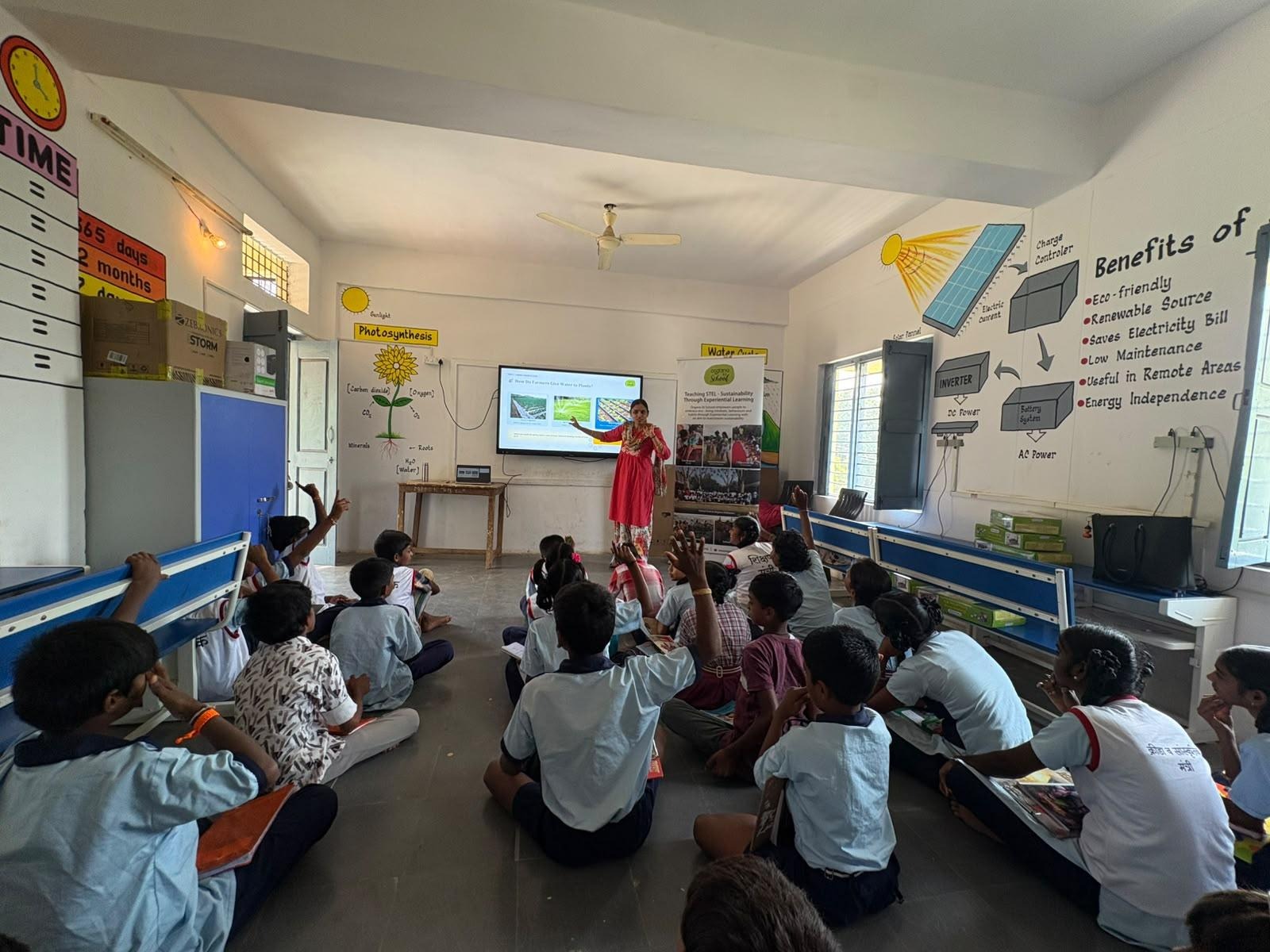
Next, the students explored three different irrigation methods – flood irrigation, sprinkler irrigation and drip irrigation. They compared how each method delivered water to plants and discussed which approach would use water more efficiently. Through this comparison, they discovered the benefits of drip irrigation, which supplies water slowly and directly to the roots, helping reduce water loss and making every drop count.
The students then explored how a drip irrigation system works. Water is stored in an elevated tank and carried through a network of tubes, with small outlets releasing water drop by drop near the roots of each plant. This helped them understand a simple principle: providing plants with the right amount of water, at the right place and at the right time, while minimising wastage.
Building a Drip System with Their Own Hands
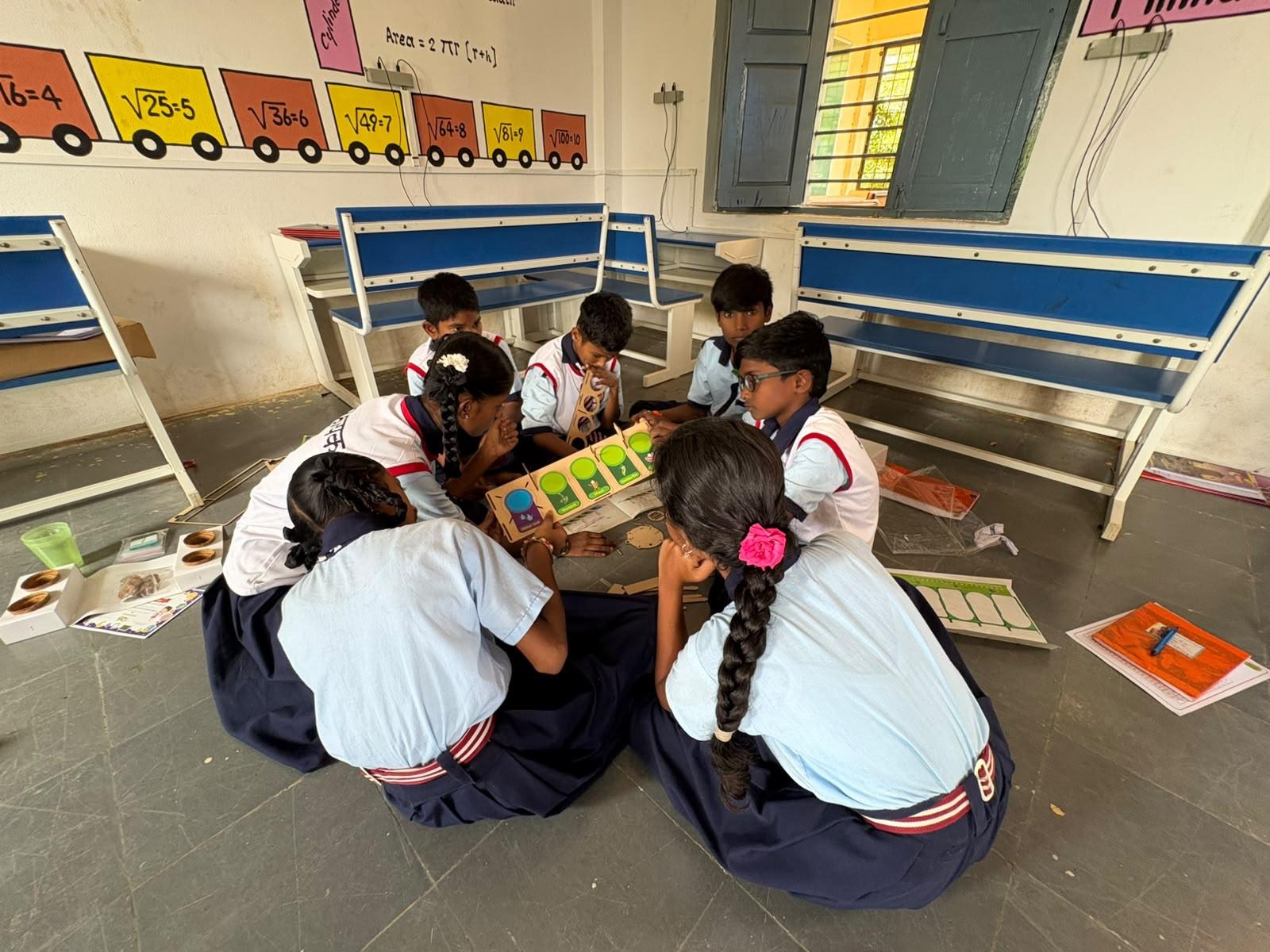
The highlight of the session was the hands-on activity, where students worked in small groups to assemble their own miniature drip irrigation systems. Using the kits provided, they connected the water tank, tubes and outlets to create a simple working model and see firsthand how water could be delivered directly to a plant's roots.
There were no motors, pumps or electricity involved. Gravity alone did the work, the same quiet force that lets farmers water entire rows using a raised tank and a well-placed pipe. Students adjusted heights, checked joints and hunted down small leaks. When the first drops appeared at the end of the tube, cheers went up around the room.
For children who may have seen drip lines in fields around them, building one from scratch changed how they saw it. It was no longer a pipe someone else had laid down, but a system they understood from tank to root.
A Habit to Carry Home
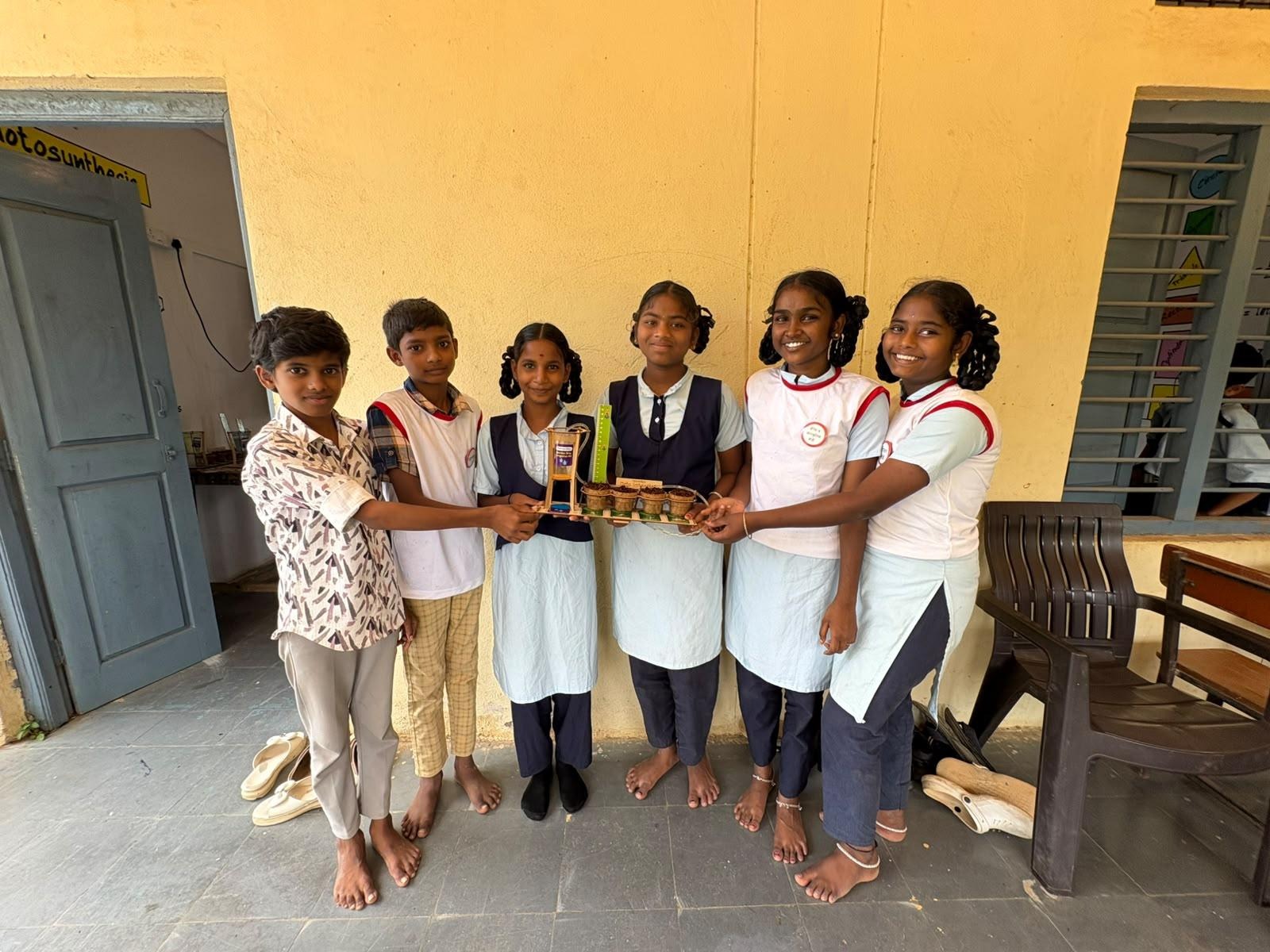
The workshop didn’t stop when the kits were packed up. Each team took away a simple growth tracker and was encouraged to follow a seedling over the coming weeks: measure its height every couple of days, note the weather, and write one line answering a single question: what did I notice today?
It’s a small exercise with a big purpose. Watering a plant becomes a daily act of paying attention, and over time, students will watch the line on their own chart climb, proof in their own handwriting of what careful watering can do.
An idea explained in a couple of hours can fade quickly. An idea tied to a living plant, watched and cared for over weeks, becomes a habit. For the 26 students of Mandal Parishad Upper Primary School, Damaragidda, water now looks less like something that simply flows from a tap and more like something precious, worth guiding carefully to where it’s needed.
Get in Touch with Organo Et School
Every Drop Starts Somewhere — Let's Bring It to Your School Too
Organo Et School empowers people to embrace eco-living mindsets, behaviors, and habits. We recognize that for any positive impact to be sustainable, it must be long-term and inter-generational.
UNESCO recognized Organo Et School as a green citizen initiative and Uplink, the open innovation platform of the World Economic Forum (WEF) recognized OES as Global Innovative Solution.
Organo Et School is an experiential learning initiative set up by Organo in 2017 and has been facilitating field visits and workshops for Schools and Interest Groups. Organo Et School has impacted over 12,500+ students, 5000+ adults,1,600+ families, 40+ schools, 35+ communities, 10+ corporates over the past 8 years.
Join us on our journey toward sustainable living by subscribing to our channel and following us on Instagram for the latest updates.
Email us at oes@organo.co.in or call us at 91541 00775
Subscribe to our Youtube channel: https://www.youtube.com/channel/UCVe5InTKtgyGsGgNVNZ5sOw
Follow OES news on our Website: https://www.organoetschool.co.in
Follow OES on Instagram: https://www.instagram.com/organo_et_school/?hl=en