From Waste to Responsibility: How We Are Rethinking Waste Management at Our Workplace
What if better waste management isn't just about the right bin in the right place—but about helping every person take responsibility for the waste they generate?
At Organo Et School (OES), this question became the starting point for a new waste management journey at our Head Office.
Our office generates roughly 25–30 kg of waste daily. When we looked closely, we found the core issue wasn't a lack of bins—it was what happened at every step, from desk to disposal. Our waste study showed that desk bins often contained mixed waste, and that around 680 tissue boxes were being consumed every month
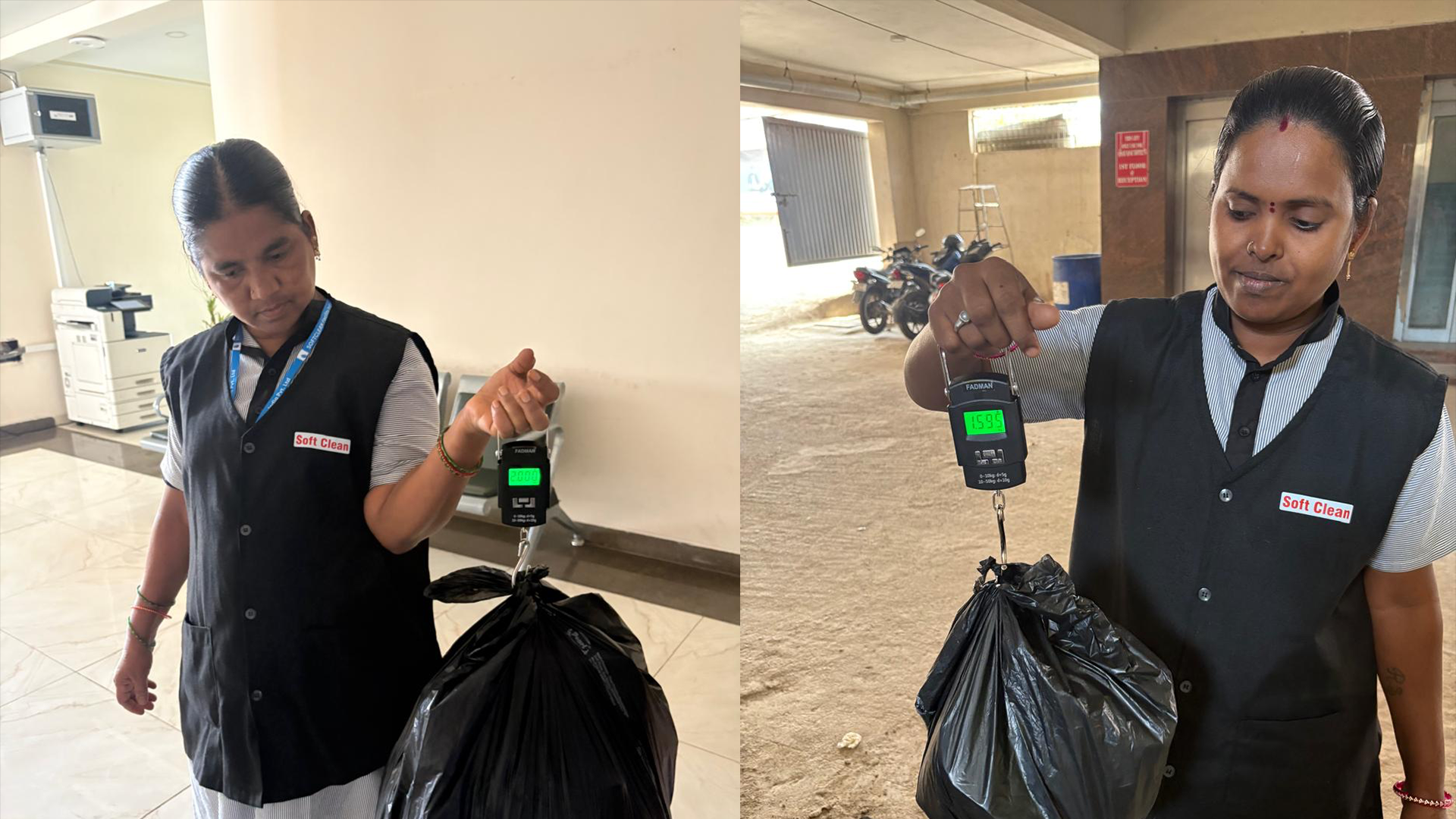
This led to a key realisation: waste management cannot be housekeeping's responsibility alone. It has to begin where waste is generated—with each employee.
From Awareness to Action
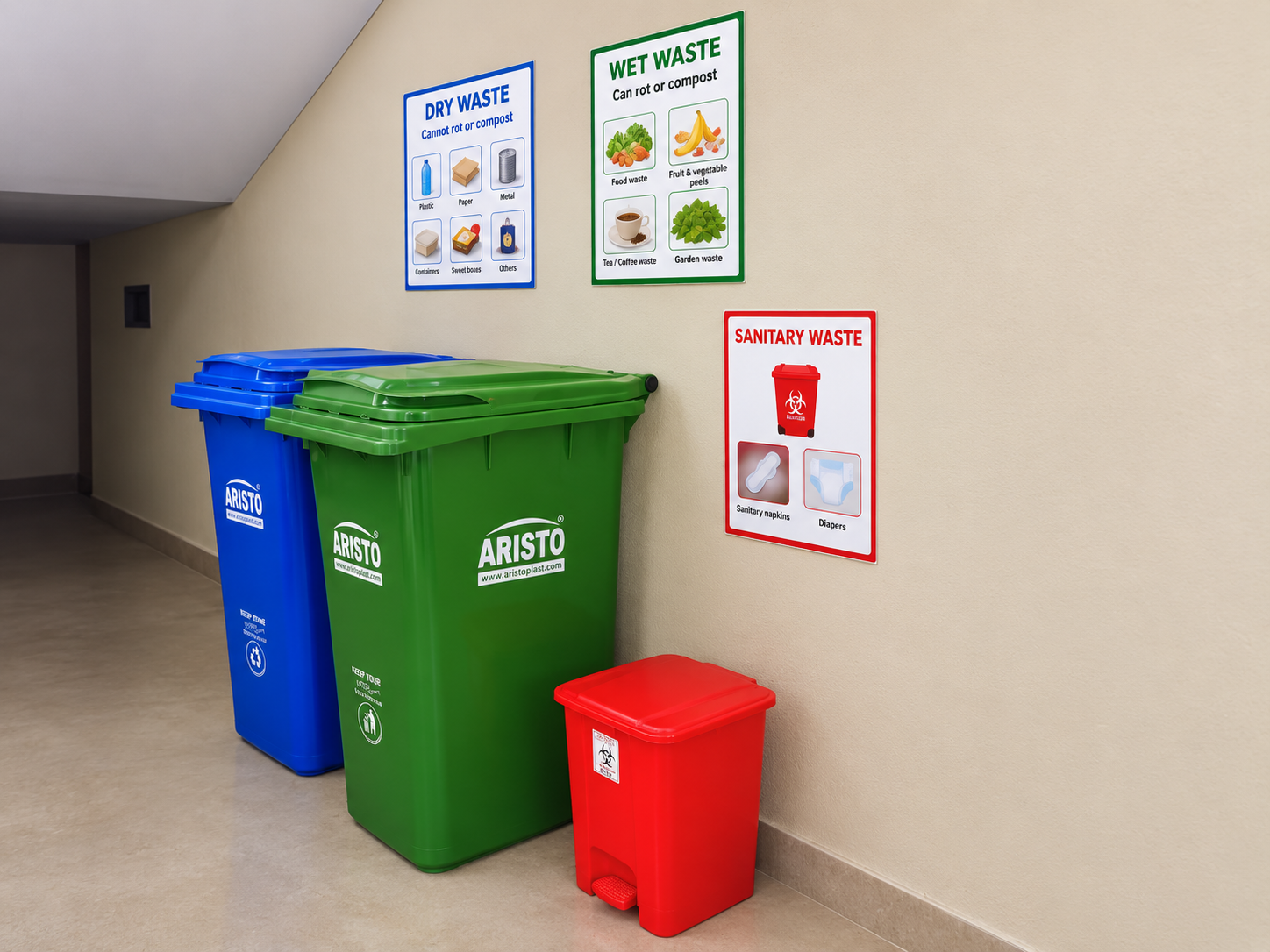
Rather than simply adding new bins, OES and the Organo Facility Management (OFM) team redesigned the entire system together:
Three groups were brought into the journey: employees and staff (segregating at source), housekeeping staff (handling segregated waste correctly), and facility management (building the systems to make it possible).
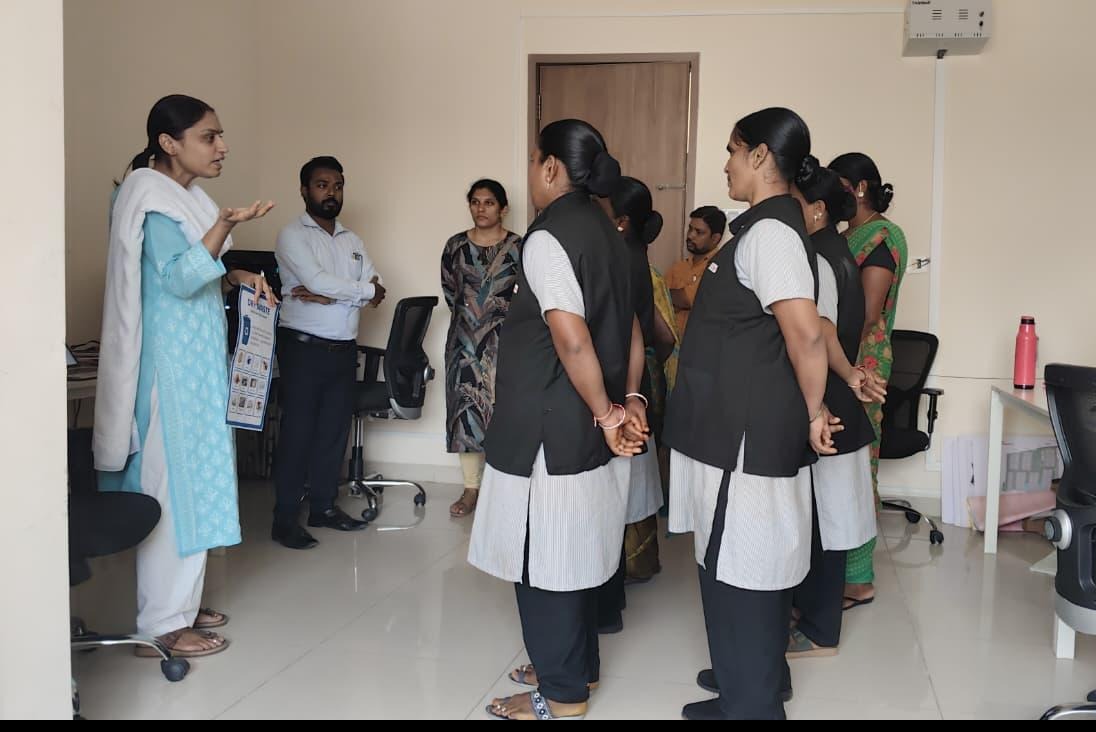
First, We Asked: What Do We Actually Know?
Before introducing the new system, we surveyed employees to understand how well waste segregation was already understood. The responses showed strong basic awareness of dry and wet waste, but also revealed where convenience and dependence on housekeeping could still get in the way of consistent action.
The challenge wasn't just knowledge—it was turning knowledge into a consistent habit.
We closed the survey by asking each employee: "What is the one change you will commit today?"—a small, personal commitment rather than just information.
Learning with the Housekeeping Team
Alongside employee engagement, Mr. Sridhar led an orientation for housekeeping staff—conducted in Telugu for comfort and participation—covering why segregation matters, bin placement, collection, handling, and the importance of weighing waste daily.
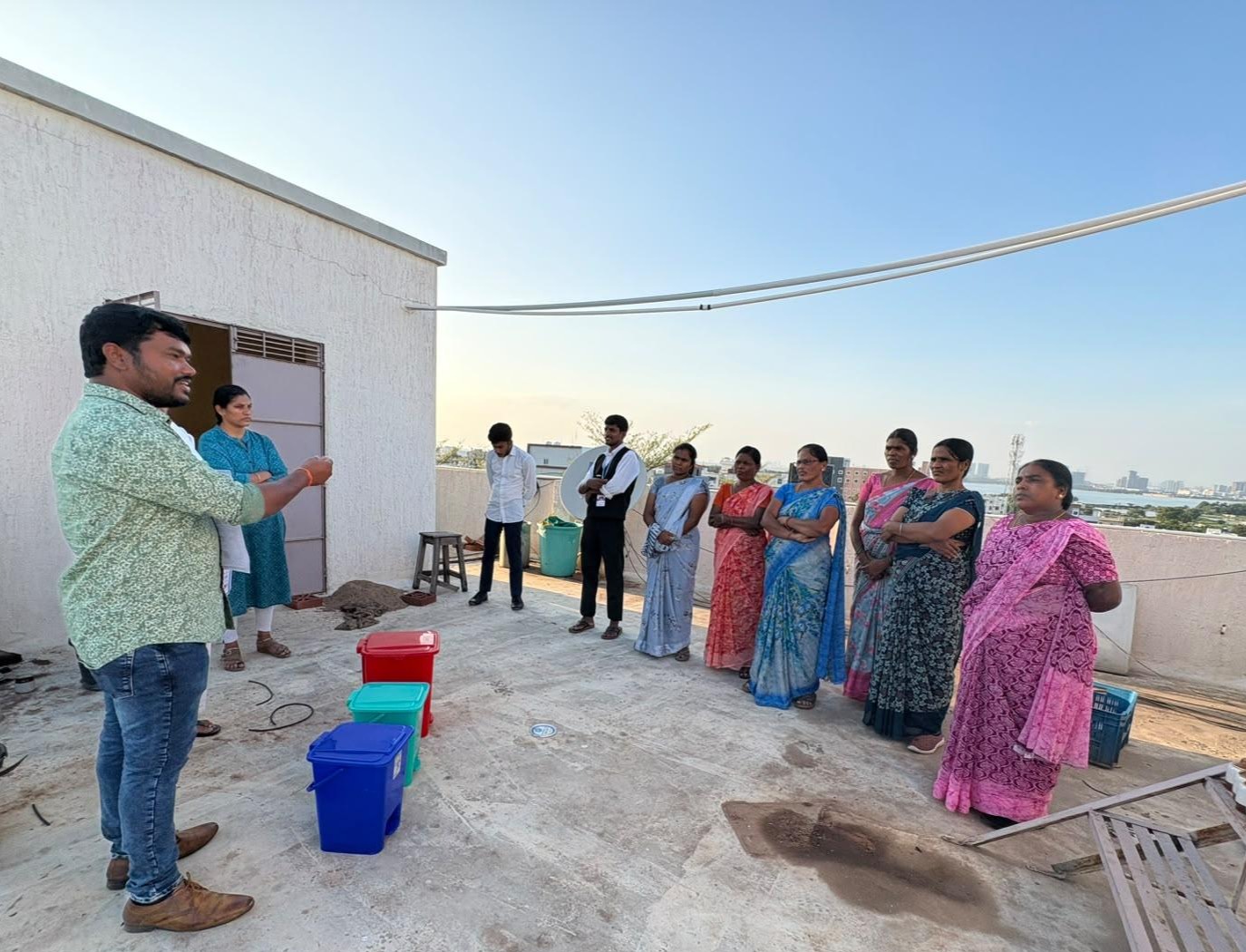
Building the System Around the Habit: Awareness alone cannot create lasting change if the system makes responsible action difficult.
OFM therefore began putting the required infrastructure in place.
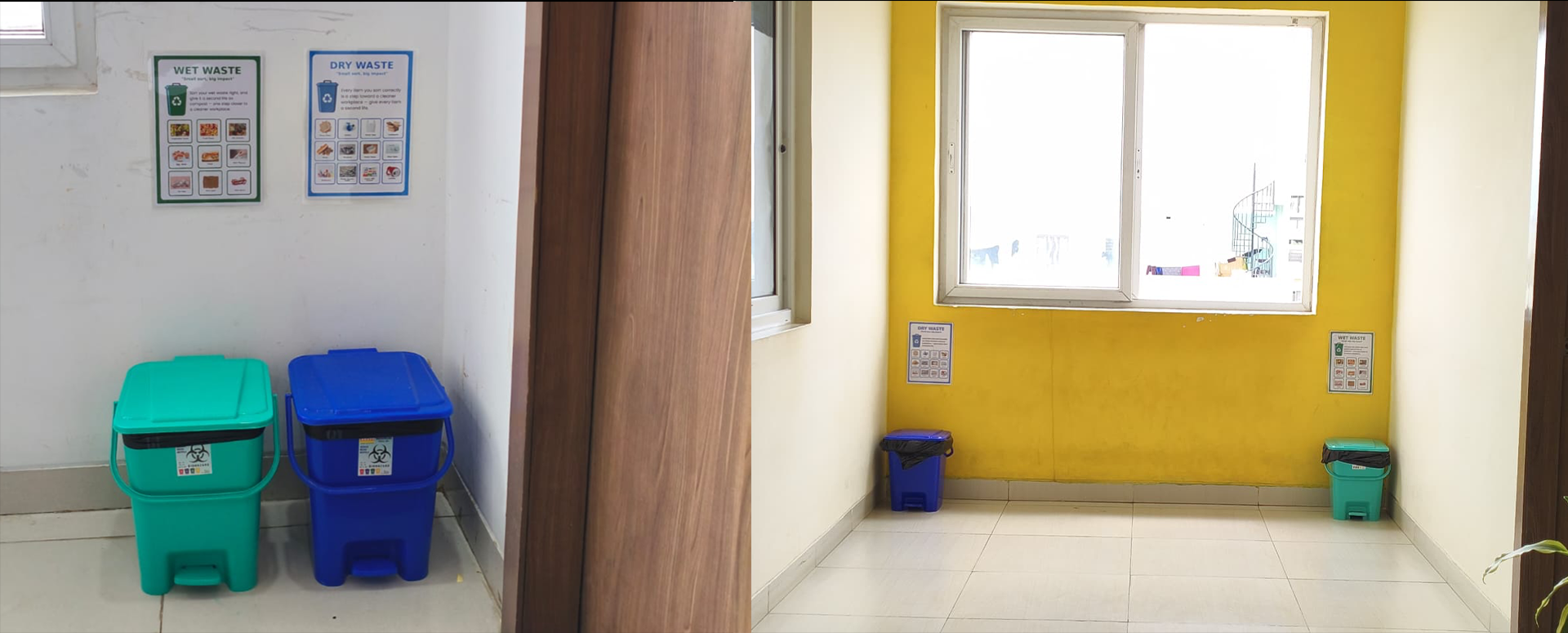
Once collected: the wet waste will be composted, dry waste is recycled, and sanitary waste/toilet rolls go for authorised incineration.
Segregation works best at the point of generation. If everything goes into one bin, it's far harder to separate later. The person who generates the waste also owns responsibility for it—housekeeping and facility management support the system, but can't replace that responsibility.
Everyone Has a Role
The strength of this initiative lies in the collaboration between OES and OFM.
OES focuses on awareness, education and building understanding. OFM focuses on creating the systems and ensuring implementation. Employees and staff take responsibility for the waste they generate, while housekeeping enables its proper collection and handling.
Each role is important. No single team can make the system work alone.
From Office to Home: A Ripple Effect
Habits built at work travel. An employee who learns to segregate, reduce, and take responsibility can carry that behaviour home—from individual to family, family to community, community to culture. That's the ripple effect we hope to create.
A Journey of Learning and Change
We know that introducing a new system does not automatically create a new habit. There will be questions, mistakes, reminders and adjustments. For us, this is a learning journey and a team effort.
The waste audit told us where we stood. The survey told us what people knew. The housekeeping orientation built capability. The new bins and posters created the system. Daily weighing will help us measure progress.
Because what gets measured gets improved.
A Collective Responsibility
This journey doesn't begin with a bin—it begins with a decision: to notice what we throw away, to ask where it should go, and not to leave it for someone else to sort.
At Organo Et School, our objective is to move from awareness to action, and from action to habit—creating people who think differently about what they consume, discard, and what responsibility really means.
"What can I do differently with the waste I generate?"
Organo Et School empowers people to embrace eco-living mindsets, behaviors, and habits. We recognize that for any positive impact to be sustainable, it must be long-term and inter-generational.
UNESCO recognized Organo Et School as a green citizen initiative and Uplink, the open innovation platform of the World Economic Forum (WEF) recognized OES as Global Innovative Solution.
Organo Et School is an experiential learning initiative set up by Organo in 2017 and has been facilitating field visits and workshops for Schools and Interest Groups. Organo Et School has impacted over 12,500+ students, 5000+ adults,1,600+ families, 40+ schools, 35+ communities, 10+ corporates over the past 8 years.
Join us on our journey toward sustainable living by subscribing to our channel and following us on Instagram for the latest updates.
Email us at oes@organo.co.in or call us at 91541 00775
Subscribe to our Youtube channel: https://www.youtube.com/channel/UCVe5InTKtgyGsGgNVNZ5sOw
Follow OES news on our Website: https://www.organoetschool.co.in
Follow OES on Instagram: https://www.instagram.com/organo_et_school/?hl=en