How much water does your family use in a day? Most of us have never stopped to count.
That was the question Kalyani S from Organo Et School opened when she met 22 students of 8th grade at ZPHS Aloor on 31st October 2026. Then she asked a second question, one easier to picture: which jobs at home need water?
Cooking. Cleaning. Washing clothes. One by one, the students listed the work that fills a normal day, and every answer had water in it. Think of a single morning: water to cook the rice, to wash the vessels after, to mop the floor and to soak the day's clothes. Water is so much a part of daily life that we hardly notice it, until we imagine it gone.
"We Can't Come to School"
The students were asked a simple question: “What would happen if, one day, there was no water?”
One student answered: "We can't eat food. We can't come to school."
A simple response, yet one that captured how deeply water is connected to our everyday lives. Without water, cooking becomes impossible, meals cannot be prepared, and even a regular school day is disturbed. The discussion helped children see water not merely as something that flows from a tap, but as an essential resource that sustains our food, routines and daily lives. It was a thought-provoking way to begin understanding the importance of water.
From the Kitchen to the Field
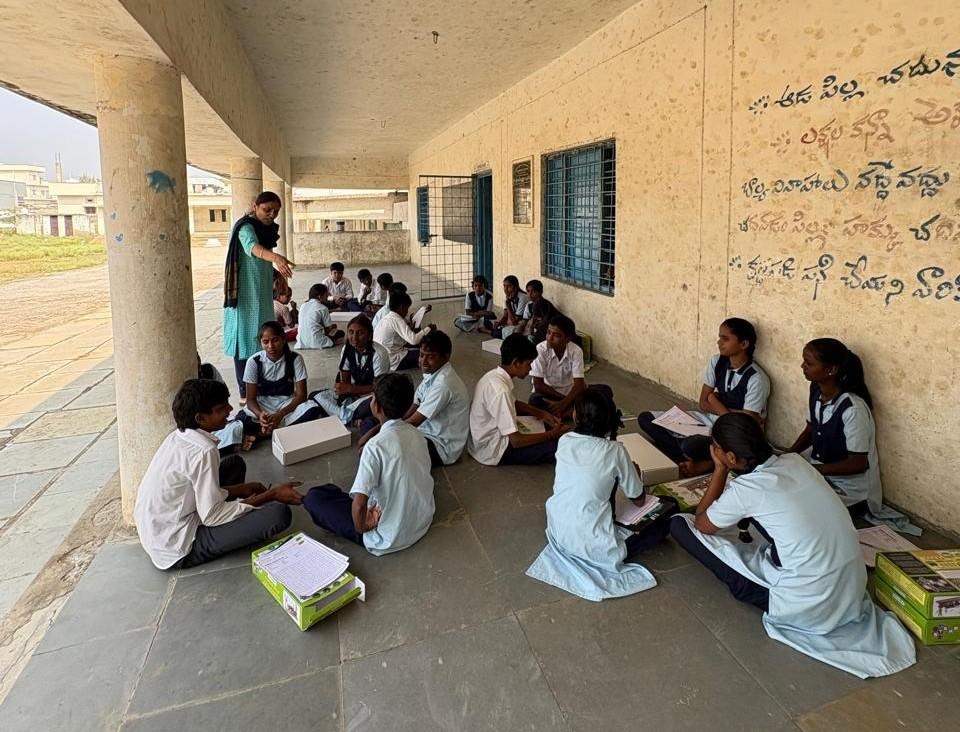
If water matters this much at home, it matters even more where our food grows. So the focus turned to the fields, and to a way of farming that saves water.
Fresh water is limited, she explained, and growing food needs a great deal of it.
That matters more than most of us realise. In India, around 80 per cent of fresh water goes into farming, so how a field is watered decides how much is left for everything else. With that in mind, the class compared three ways of watering crops.
- Flood irrigation: Water is allowed to flow across the entire field. Much of it seeps into the ground or evaporates before reaching the roots, resulting in considerable water wastage.
- Sprinkler irrigation: Water is sprayed into the air like rain and spread across the field. While it uses less water than flooding, some is lost to evaporation and wind before reaching the soil.
- Drip irrigation: Water travels through a network of thin pipes and is released drop by drop near the roots of each plant. This ensures that water reaches the crop directly, reducing wastage.
This comparison helped students understand that saving water is not just about using less, but also about delivering it where it is needed most.
Flood and sprinklers water the field. Drip waters the plant. Less water is lost on the way, and the soil stays moist right where the roots need it. Because the soil between plants stays dry, fewer weeds grow there too.
Watching the Drops Fall
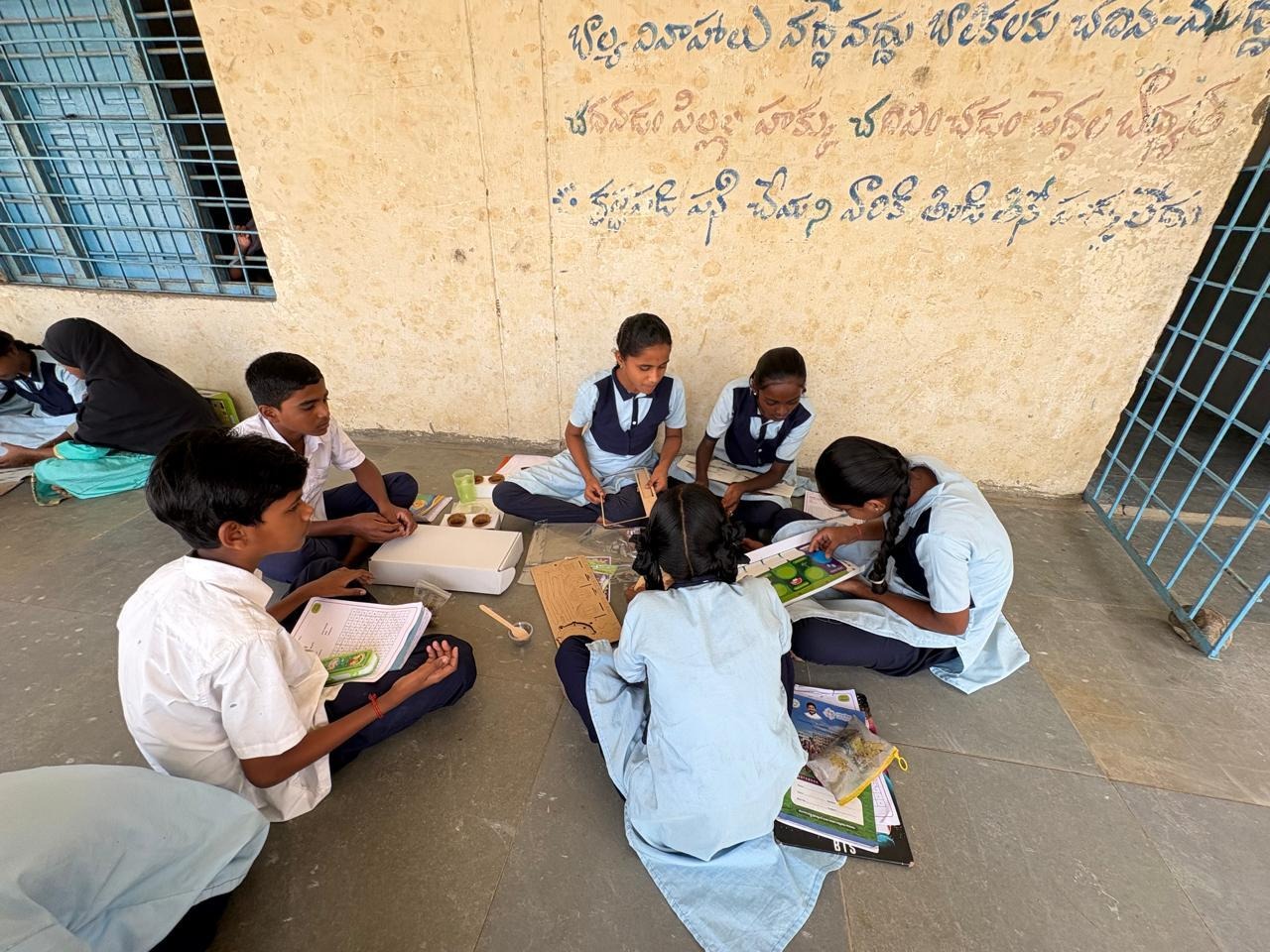
The students received miniature drip irrigation kits: a small water container, a thin tube and a tiny opening that lets water out one drop at a time. They set them up, watched the first drops land at the root and saw how little water a plant needs when none of it is wasted.
It is the same idea a farmer uses across a whole field, made small enough for a classroom. A drip doesn't look like much. But one steady drop, landing in the same spot, is enough to keep the soil around a root moist.
The students will now take the kits forward through a month-long experiment. Having sown their seeds, they will observe and record plant growth using a tracker sheet. Alongside this, a water challenge sheet will encourage them to monitor their water use at home and reflect on everyday ways to conserve it.
What They Took Home
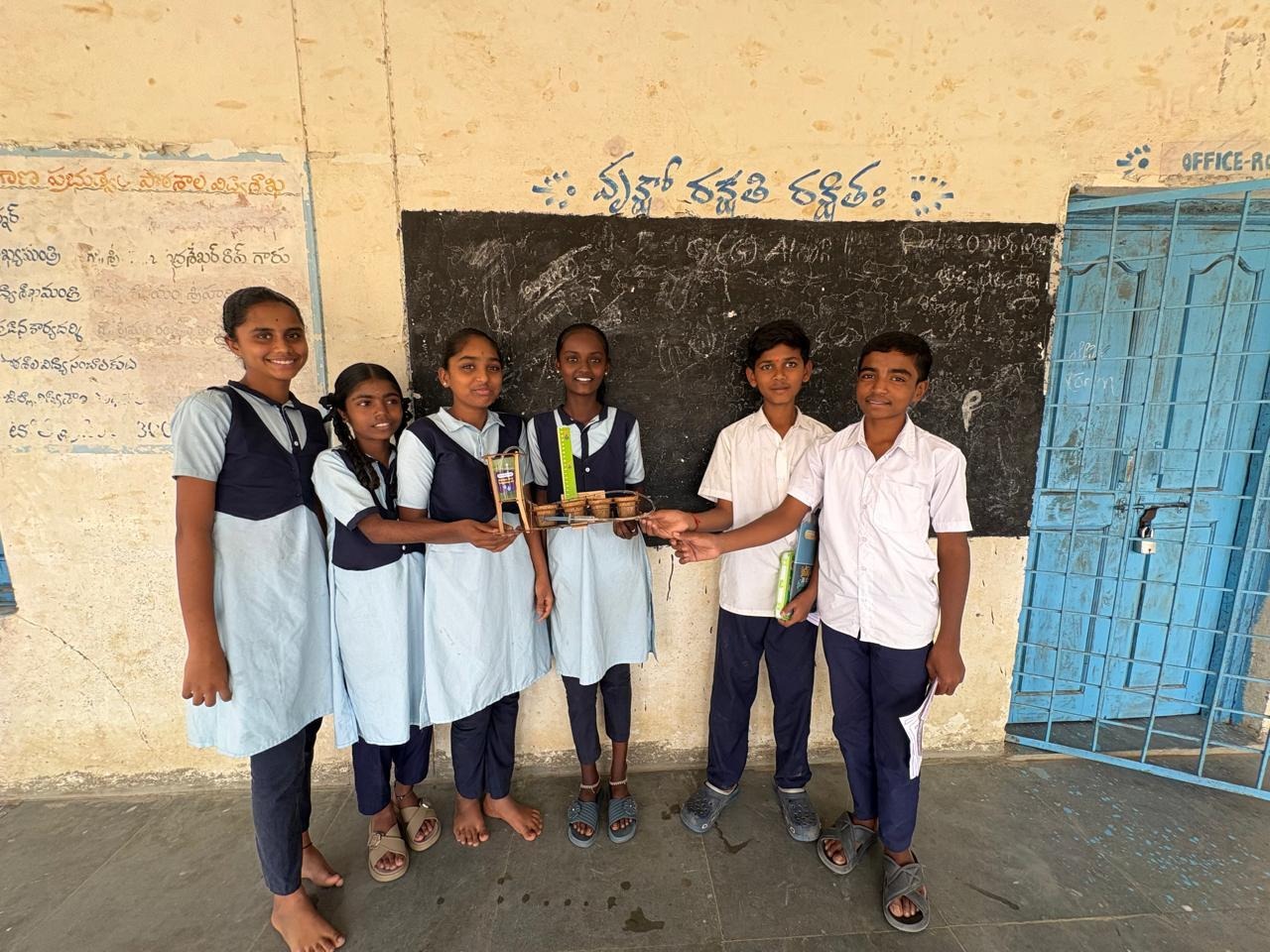
The day's biggest idea was a simple one. A plant doesn't need more water. It needs water in the right place.
The same is true at home. A tap left running while brushing, or a bucket filled to the brim when half would do, wastes water the way a flooded field does. Small habits, repeated every day, add up.
The students began the session listing how their families use water, and ended it knowing a field can be watered with care, one drop at a time. Over the next month, their kits and trackers will show whether that care travels home.
So here's a question worth carrying back to our own kitchens, bathrooms and gardens: if every drop counts in a field, how many are we letting go down the drain?
Organo Et School empowers people to embrace eco-living mindsets, behaviors, and habits. We recognize that for any positive impact to be sustainable, it must be long-term and inter-generational.
UNESCO recognized Organo Et School as a green citizen initiative and Uplink, the open innovation platform of the World Economic Forum (WEF) recognized OES as Global Innovative Solution.
Organo Et School is an experiential learning initiative set up by Organo in 2017 and has been facilitating field visits and workshops for Schools and Interest Groups. Organo Et School has impacted over 12,500+ students, 5000+ adults,1,600+ families, 40+ schools, 35+ communities, 10+ corporates over the past 8 years.
Join us on our journey toward sustainable living by subscribing to our channel and following us on Instagram for the latest updates.
Email us at oes@organo.co.in or call us at 91541 00775
Subscribe to our Youtube channel: https://www.youtube.com/channel/UCVe5InTKtgyGsGgNVNZ5sOw
Follow OES news on our Website: https://www.organoetschool.co.in
Follow OES on Instagram: https://www.instagram.com/organo_et_school/?hl=en
.jpeg&&description= From the Kitchen Tap to the Field: Drip Irrigation at ZPHS Aloor )