On 23rd September 2026, three architecture students from Jawaharlal Nehru Architecture and Fine Arts University (JNAFAU) visited Organo Antharam as part of their academic curriculum. Guided by the Organo Et School team, the students explored how sustainability can be thoughtfully integrated into the planning, design and functioning of a residential community.
The visit offered the students an opportunity to look beyond individual buildings and understand how architecture, natural systems, energy, water, food and community spaces can work together to create a more sustainable way of living.
Understanding the Philosophy of Sapthapatha
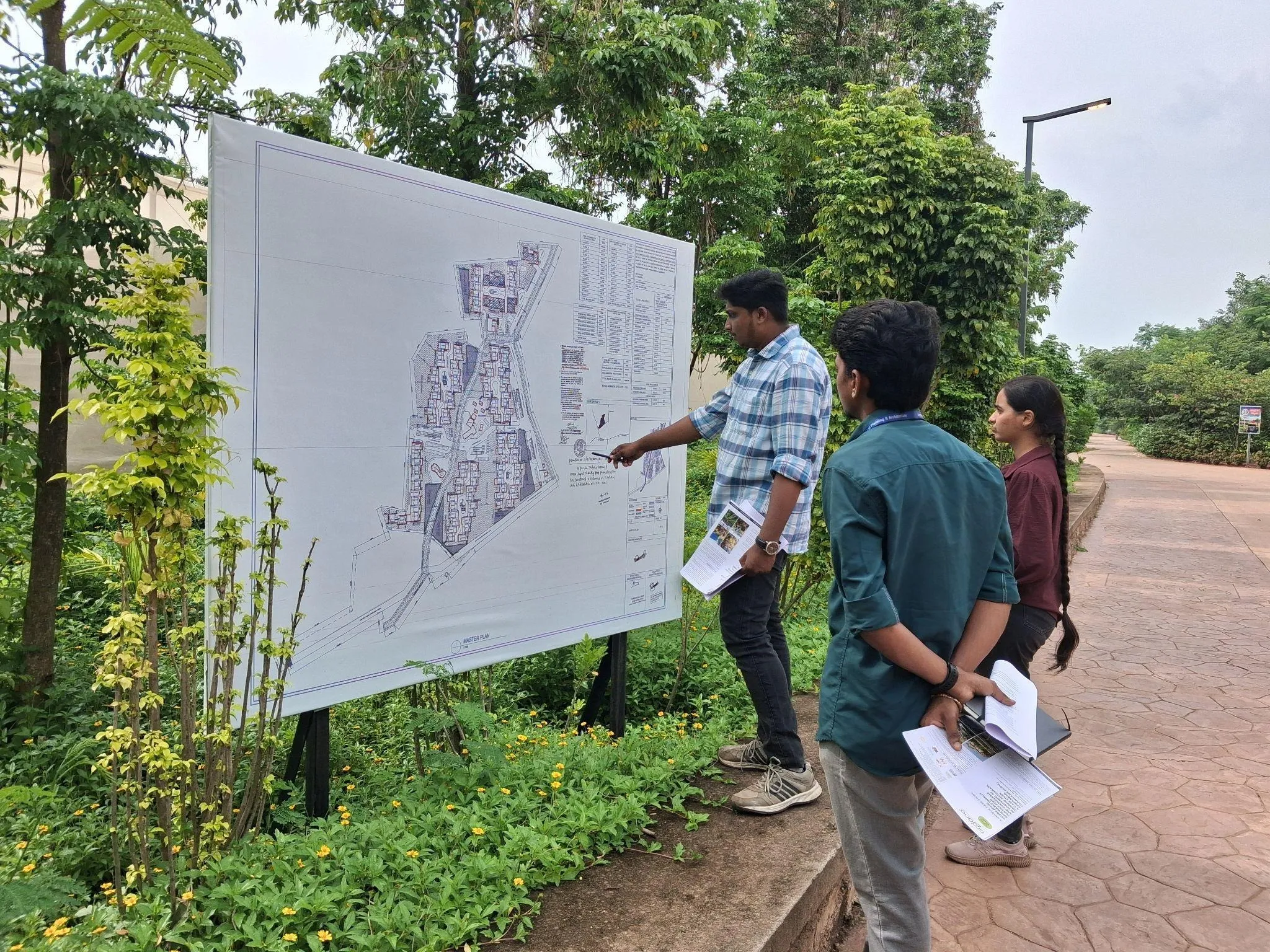
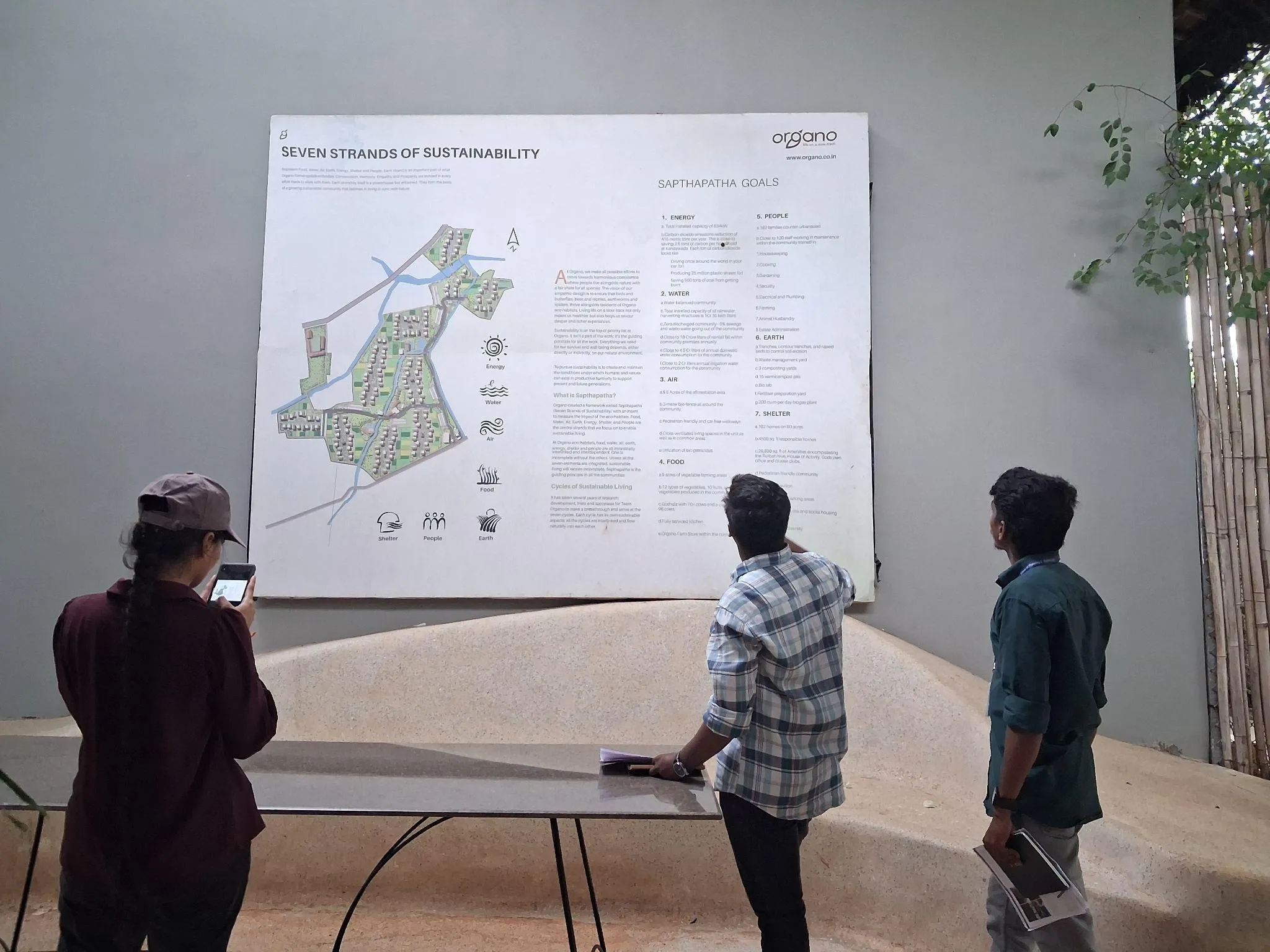
The visit began with an introduction to the site plan and the principles of Sapthapatha, which guided the students in understanding the broader vision behind Organo Antharam. They explored how sustainability is integrated throughout the project, extending from food and shelter to energy, water management, ecological conservation and community well-being.
Through the site plan, the students observed how the different elements of the community are interconnected and how thoughtful planning can support a lifestyle that is more closely connected to nature.
Exploring the Possibilities of a Net-Zero Community
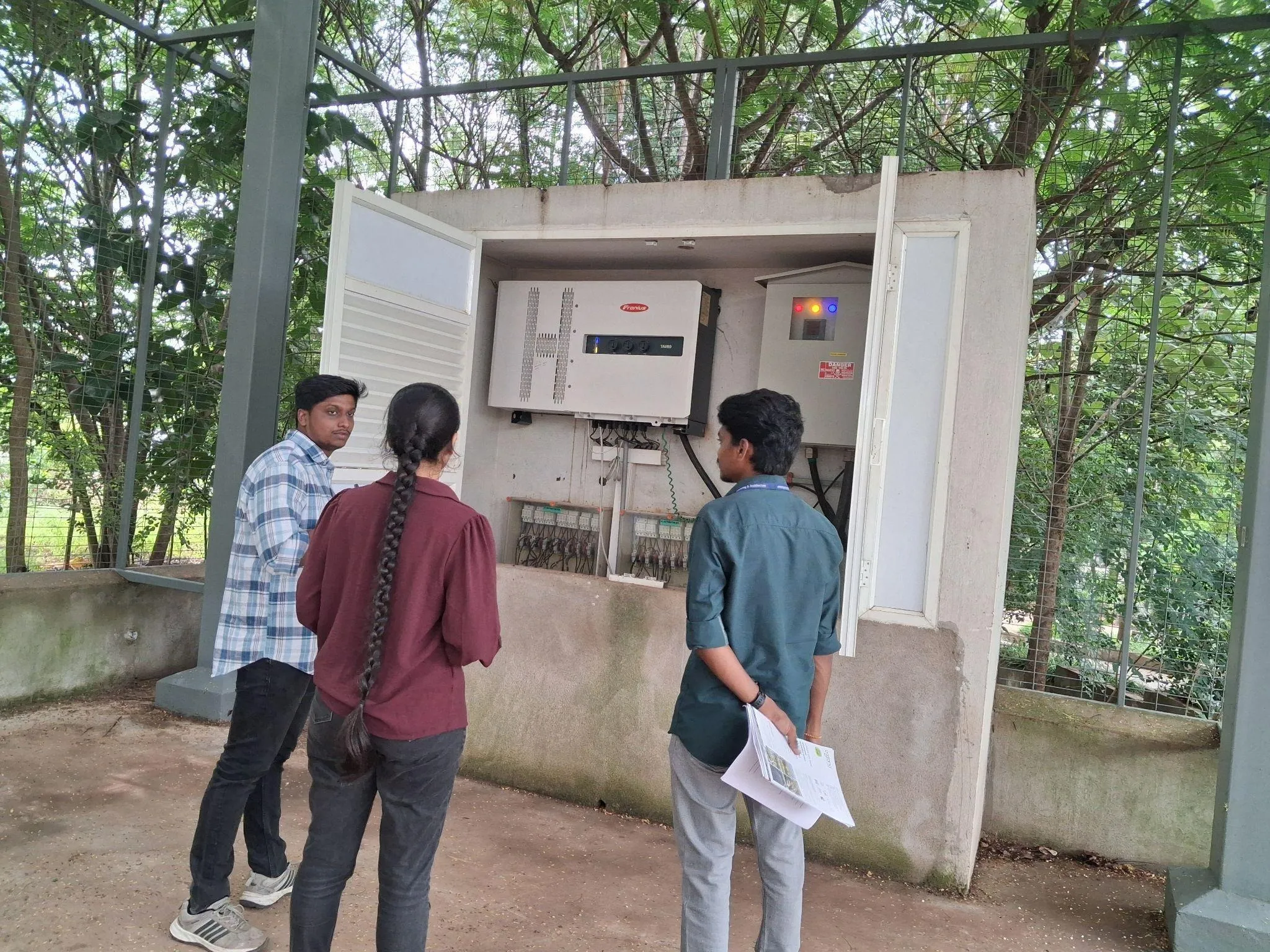
One of the key learning experiences was understanding how renewable energy contributes to the functioning of the community. The students were introduced to the solar energy generation system and battery energy storage system, learning how energy is produced, stored and utilised to support the community's needs.
This demonstrated how sustainable architecture extends beyond building design to include energy infrastructure and resource management at the community level.
Architecture Shaped by Land and Water
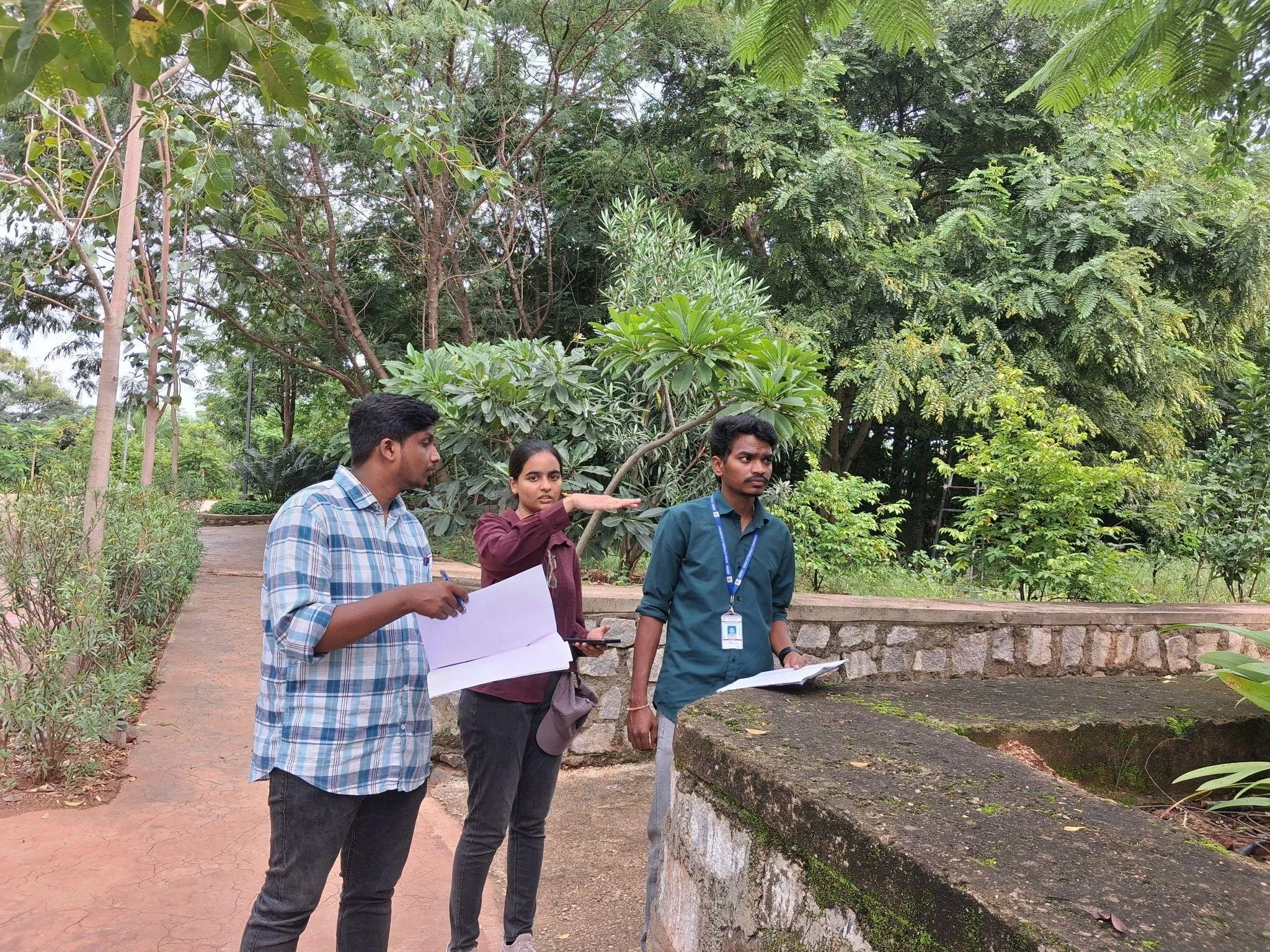
The students also explored the relationship between the typology of houses and the geology of the area. They observed how the natural characteristics of a site can influence architectural planning and the way a residential community is developed.
A particularly insightful aspect of the visit was the dug well and its role in collecting and storing water from the surrounding area for use within the community. This offered the students a practical perspective on how water management can be integrated into site planning, making use of the land's natural features.
From Collective Farming to Clean Air
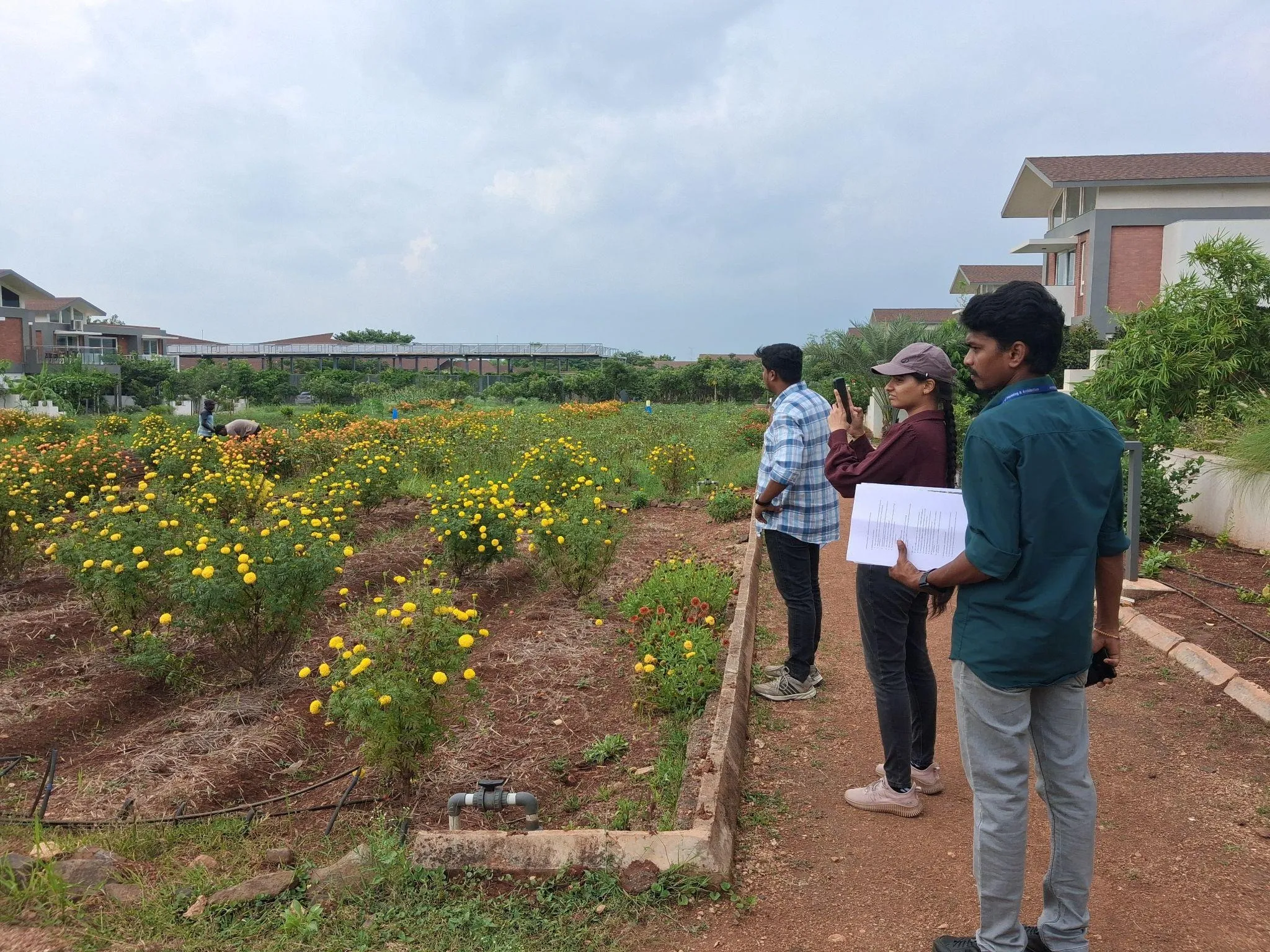
At Organo Antharam, sustainability also finds expression in the relationship between food production and community life. The students observed how collective farming is integrated into the project alongside a goshala, highlighting the connection between agriculture, livestock and a more nature-oriented lifestyle.
The project also incorporates approximately 20% afforestation within the community, contributing to green cover and creating a closer connection with nature. These elements illustrated how residential developments can consider ecological spaces alongside built environments.
Designing Spaces for People and Well-Being
Beyond infrastructure and environmental systems, the visit highlighted the importance of designing spaces that encourage people to spend more time outdoors and interact with one another.
The students explored community spaces such as the cluster clubs, House of Activities and God's Own Office, which provide settings for wellness, recreation and community engagement. These spaces demonstrate how the design of a residential environment can influence everyday experiences, encourage outdoor activities and support social connections.
A Learning Experience Beyond the Classroom
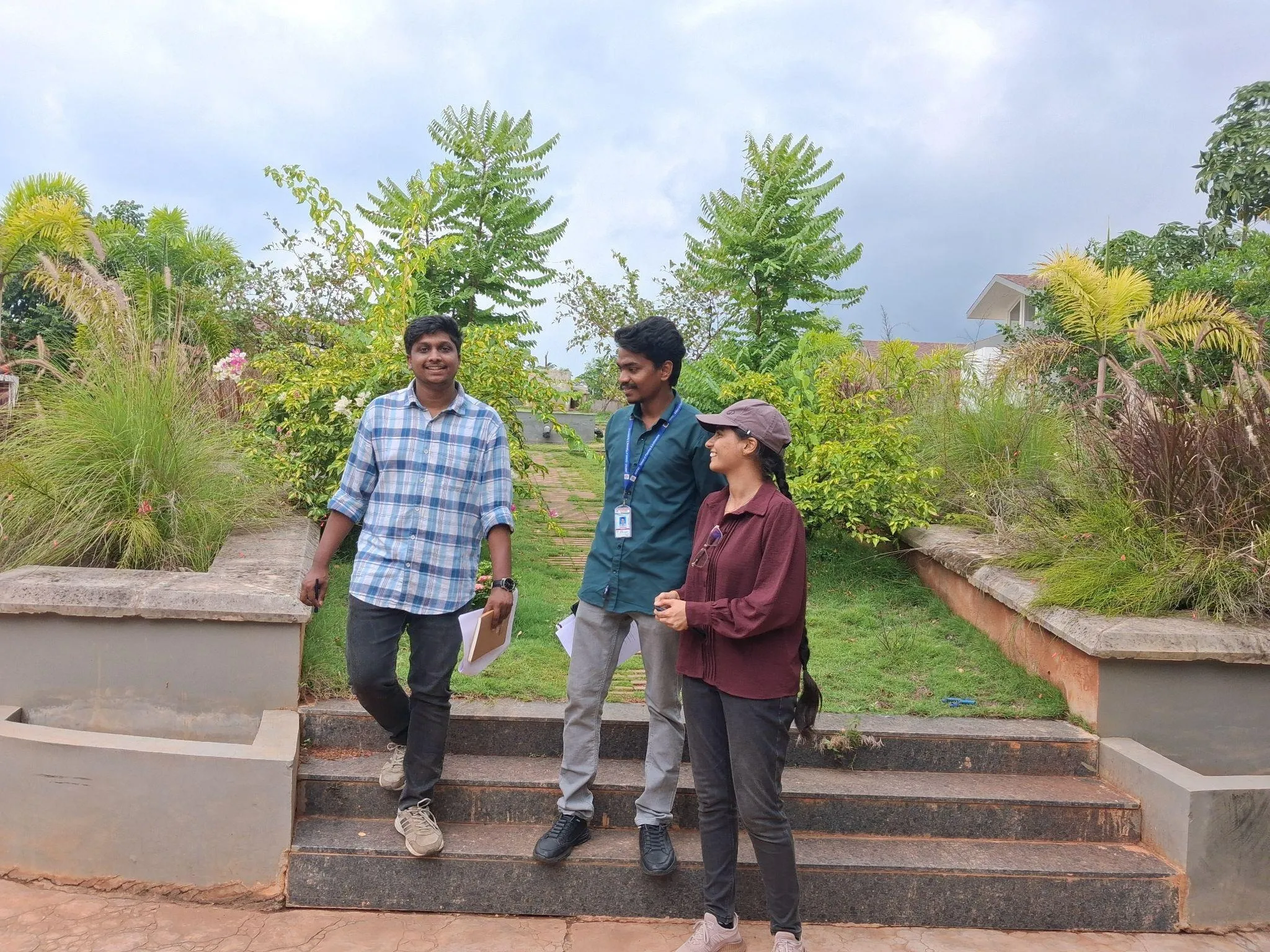
The visit to Organo Antharam gave the architecture students a practical understanding of how sustainable design principles can come together at the scale of an entire community. From site planning and water conservation to renewable energy, collective farming, afforestation and shared spaces, each element offered an opportunity to understand the interconnected nature of sustainable development.
For aspiring architects, the experience reinforced an important perspective: architecture is not only about designing buildings, but also about shaping the relationship between people, the environment and the spaces they inhabit.
At Organo Antharam, the students witnessed how sustainability can be approached as an integrated way of living—one that brings together thoughtful design, ecological sensitivity and community well-being.
Organo Et School continues to create experiential learning opportunities that connect academic knowledge with real-world examples of sustainability, helping students explore how more responsible ways of living can be designed and experienced.
Organo Et School empowers people to embrace eco-living mindsets, behaviors, and habits. We recognize that for any positive impact to be sustainable, it must be long-term and inter-generational.
UNESCO recognized Organo Et School as a green citizen initiative and Uplink, the open innovation platform of the World Economic Forum (WEF) recognized OES as Global Innovative Solution.
Organo Et School is an experiential learning initiative set up by Organo in 2017 and has been facilitating field visits and workshops for Schools and Interest Groups. Organo Et School has impacted over 12,500+ students, 5000+ adults,1,600+ families, 40+ schools, 35+ communities, 10+ corporates over the past 8 years.
Join us on our journey toward sustainable living by subscribing to our channel and following us on Instagram for the latest updates.
Email us at oes@organo.co.in or call us at 91541 00775
Subscribe to our Youtube channel: https://www.youtube.com/channel/UCVe5InTKtgyGsGgNVNZ5sOw
Follow OES news on our Website: https://www.organoetschool.co.in
Follow OES on Instagram: https://www.instagram.com/organo_et_school/?hl=en
%20(1).webp&&description=Architecture Students Explore Sustainable Living at Organo Antharam)